Christmas Tree 24oz Venti Cold Cup: A Designer's Hands-On Review
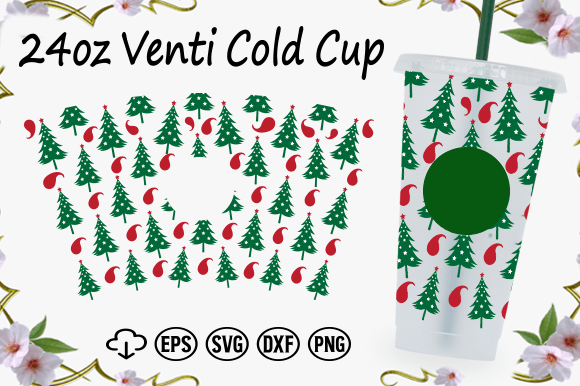
When I first opened the Christmas Tree 24oz Venti Cold Cup design file, I felt that familiar spark, the kind that happens when a seasonal graphic actually understands proportion and placement. This is not a generic holiday tree slapped onto a template. The wrap layout has a gentle rhythm, and the tree motif settles into the cup silhouette with a natural ease that makes me think about how it would translate into thread, fabric, and finished product appeal. As someone who spends more time testing designs than admiring them on a screen, I immediately started imagining how this would behave under a needle, on a tote bag, across a sweatshirt, or centered on a pillow cover.
What caught my eye first was the balance between the tree shape and the surrounding space. The Christmas tree has a soft, slightly playful silhouette without tipping into cartoon territory. It feels festive but not juvenile, which is a difficult line to walk. For an embroidery designer, that kind of shape matters because it determines how the satin stitch borders will read, how the fill stitch areas will settle, and whether the overall design will look polished on textured fabric. I could see this working beautifully on a natural linen tea towel or a cozy fleece blanket, places where the design needs to feel intentional rather than just printed on.
First Impressions and Visual Personality
The mood of the Christmas Tree 24oz Venti Cold Cup design leans warm and approachable. It does not rely on intricate ornaments or overly delicate branches to make its point. Instead, the tree profile carries a gentle confidence that would appeal to customers browsing a holiday market, scrolling through Etsy listings, or looking for a personalized gift that feels handmade rather than mass-produced. I appreciate designs that know what they are, and this one seems to understand its place in the seasonal product lineup without shouting for attention.
From a practical standpoint, the wrap format is interesting. Although the original file is built as an SVG for cutting machines and compatible with Design Space, the visual structure translates surprisingly well into embroidery thinking. The elongated vertical layout mirrors the kind of placement I often use on apron fronts, tall tote bags, and even the back panel of a denim jacket. The tree remains the focal point, and the surrounding elements frame it without crowding the stitch field. That kind of spatial awareness is something I always look for when evaluating a design for real embroidery use.
How the Design Performs in Real Embroidery Projects
I ran through my usual mental checklist while examining the Christmas Tree 24oz Venti Cold Cup design. The first test was imagining it on a midweight canvas tote bag, a product I make frequently for holiday craft fairs. On that surface, the tree would need a clean running stitch underlay to keep the fabric from shifting, and the outer edges would benefit from a well-defined satin stitch border. Because the tree shape is relatively simple, the stitch density could stay moderate, which means less thread buildup and a softer hand feel on the finished product. Customers notice that softness when they pick up a bag or touch a sweatshirt, and it affects their perception of quality more than most people realize.
Then I considered the design on a dark heather gray sweatshirt. Dark fabric always demands higher contrast in thread colors, and the Christmas Tree 24oz Venti Cold Cup design would need a thoughtful color palette shift. A bright pine green that looks vibrant on a white screen can turn muddy on a charcoal background. I would test a slightly lighter, more saturated green thread, and possibly add a subtle metallic gold accent for the tree topper or decorative dots. This is the kind of adjustment that separates a professional finished product from a hobbyist experiment, and the design gives enough room for that creative interpretation without losing its identity.
Baby clothes and nursery decor came to mind next. The tree shape is gentle enough for a baby onesie or a small keepsake blanket. The key consideration here is size. On a tiny garment, the design would need to be scaled down carefully, and I would check whether the internal details hold up at a reduced hoop size. Some designs collapse when shrunk, their fine lines turning into a blurry mess of overlapping stitches. Based on the visual structure, the Christmas Tree 24oz Venti Cold Cup has enough breathing room to survive a modest reduction, but I would always test on scrap fabric before committing to a finished piece.
Real-Life Scenario: A Holiday Tote Bag for a Boutique Order
Let me walk through a concrete example. A boutique owner I work with every November asks for a run of embroidered tote bags she sells as gift-wrapping alternatives. The bags are natural cotton, medium weight, with a slightly slubby texture. She wants something that feels Christmassy but not cluttered, and the tree design needs to sit centered on the front panel without overwhelming the bag's proportions.
The Christmas Tree 24oz Venti Cold Cup design would fit this brief remarkably well. I would hoop the bag with a medium-weight cutaway stabilizer, choose a deep spruce green for the tree body, and use a warm cream thread for any accent shapes. The vertical orientation aligns with the bag's natural shape, and the tree's uncluttered silhouette means the stitching would read clearly even from a few feet away. At a craft fair table, that kind of visual clarity draws people in. They can see the design, understand it immediately, and connect with the holiday mood. That is the practical magic of a well-chosen embroidery design.
After completing the first sample, I would wash the bag twice to check for thread shrinkage, fabric puckering, and any distortion around the stitched area. The Christmas Tree 24oz Venti Cold Cup design, with its moderate detail level, should hold up well through laundering if the stabilizer choice and stitch density are correct. I would also photograph the bag in natural light for a printable mockup, which the boutique owner uses in her online shop. The design's clean lines photograph beautifully, and that matters for Etsy seller listings where the thumbnail image makes or breaks the click.
Where to Use the Design Carefully
No design is universal, and the Christmas Tree 24oz Venti Cold Cup has some natural limitations that experienced embroiderers should respect. Stretchy fabrics like performance fleece or thin jersey require extra attention. The tree's vertical proportions could warp if the fabric shifts during stitching, so a quality fusible stabilizer and maybe a basting spray are non-negotiable. Caps and hats present another challenge because the curved surface can distort the wrap layout. I would probably not use this design on a structured baseball cap without significant resizing and repositioning.
Small hoop sizes also demand caution. If your machine maxes out at a 4x4 inch field, the design may need to be split or significantly reduced. At very small sizes, the tree's internal details could lose definition, and the satin stitch borders might become disproportionately thick relative to the overall shape. I would test the design at three different sizes on scrap fabric, noting how each version reads from a normal viewing distance. The results of those tests would guide my product decisions for the entire holiday season.
Layered garments, like a zip-up hoodie with a front pocket, require careful placement planning. The tree design should not get cut off by a pocket edge or a zipper seam. I always measure twice and mark the placement with a water-soluble pen before hooping. The Christmas Tree 24oz Venti Cold Cup design deserves that extra attention because its vertical flow depends on uninterrupted visual space. A chopped-off tree bottom looks like an accident, not a design choice.
Practical Embroidery Designer Notes
Before any design goes into production, I follow a checklist that has saved me from costly mistakes more times than I can count. The Christmas Tree 24oz Venti Cold Cup design is no exception. Here is what I would recommend to any embroidery designer, small business owner, or hobbyist planning to use this graphic for stitched projects.
- Test on scrap fabric first. Run a full stitch-out on a fabric similar to your final product. Check for gaps, thread breaks, and registration issues before you touch the actual garment or accessory.
- Check thread color contrast. View the design in grayscale on your screen to see how the values relate. A design that looks vibrant in color can turn flat if all the thread colors share the same tonal weight.
- Review stitch density. If the design feels stiff or causes the fabric to ripple, reduce the density slightly or switch to a lighter stabilizer. A soft, wearable finished product is always the goal.
- Confirm hoop size. Measure the design's actual stitch area and compare it to your available hoops. Leave at least half an inch of clearance on all sides for proper hooping.
- Inspect small details. Zoom in on the digital preview and look for tiny elements that might not stitch cleanly. Simplify or enlarge as needed.
- Test on light and dark fabric. The same thread colors will look dramatically different on a white towel versus a navy sweatshirt. Adjust your palette for each background.
- Use proper stabilizer. Match the stabilizer to the fabric weight and stretch. For the tote bag example, a cutaway stabilizer is ideal. For a thin t-shirt, a fusible mesh might work better.
- Check licensing terms. Before selling finished items or digital embroidery files, confirm that the design's license allows commercial use. The original file is listed as an SVG for cutting machines, so verify the terms with the source before adapting it for embroidery.
How the Design Affects Product Value and Customer Perception
A well-executed embroidery design does more than decorate fabric. It shapes how customers feel about the product, the brand, and the person who made it. The Christmas Tree 24oz Venti Cold Cup design has a friendly, recognizable holiday presence that builds immediate emotional connection. When someone sees this tree stitched on a kitchen towel, a pillow cover, or a baby blanket, they do not just see a tree. They see a thoughtful gift, a cozy home accent, and a piece of seasonal warmth they want to bring into their own space.
For small shop owners and craft business operators, that emotional response translates directly into sales. The design's clean, uncluttered look photographs well, which improves listing quality on platforms like Etsy. It also works across multiple product categories, from custom apparel to personalized gift items, giving sellers flexibility without needing to invest in dozens of different designs. Consistency across products builds brand recognition, and a recognizable holiday style can become a signature look that brings customers back year after year.
I also think about the person receiving the item. A hand-embroidered tote bag with this tree design feels substantial and intentional. It does not look like something grabbed off a clearance rack. The stitching adds texture and depth that a printed design cannot replicate, and that tactile quality matters for giftability. When someone runs their fingers over the stitches and smiles, the design has done its job.
Final Thoughts on the Design's Practical Value
The Christmas Tree 24oz Venti Cold Cup design earns its place in a serious embroidery workflow because it understands restraint. It does not try to do too much. The tree shape is clear, the layout is adaptable, and the overall aesthetic fits a wide range of holiday products without feeling dated or overly trendy. Whether I am making a single custom gift for a family member or producing a batch of inventory for a holiday market, I want designs that stitch reliably, look professional, and connect with people. This one checks those boxes.
For embroidery designers, Etsy seller accounts, boutique owners, and makers who care about the difference between a design that looks good on a screen and one that actually works under a needle, the Christmas Tree 24oz Venti Cold Cup is worth a close look. Test it, adjust the thread palette for your fabric, respect the size limitations, and build something beautiful. The holiday season rewards preparation, and a strong, stitch-ready design is one of the best investments a craft business can make before the rush begins.