Sea Turtle Venti Cup Graphics & Tumbler Wraps Review
First Impressions of the Sea Turtle Artwork
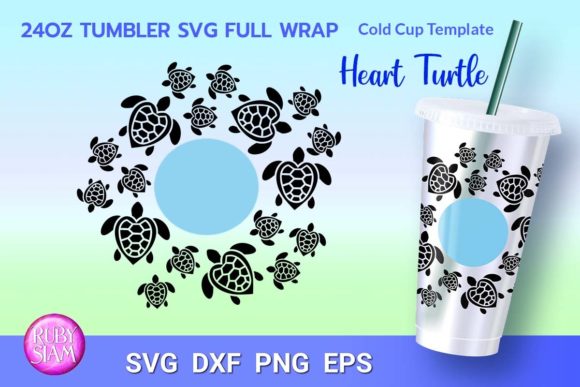
The moment you open the file folder for Sea Turtle, Turtle Lover Gift, Venti Cup, you sense a design that was built for emotional connection. This isn’t a cold, generic pattern. The sea turtle svg illustration carries a gentle, hand-drawn quality, with subtle hearts woven into the shell and flippers. It radiates warmth, a quiet coastal charm, and a touch of playful femininity. As a designer who regularly selects graphic design assets for editorial projects, I immediately see its power to soften a page, make a blog feel more inviting, and signal a lifestyle niche that values meaning over minimalism.
The composition is balanced. The turtle faces forward with soft, rounded curves, and the hearts are placed without overwhelming the main silhouette. Even when scaled to small sizes, the shape remains readable. This is crucial for blog graphics and website headers where clarity often disappears when a design is viewed on a phone screen. The file format — an eSVG file for Cricut — gives you complete freedom to rescale, recolor, and layer without losing crisp edges. While the product title mentions 24oz Venti Cold Cup and Venti Cold Cup, the core graphic works far beyond tumbler templates. It’s a modular, friendly illustration you can pull into any digital publishing project.
How This Design Fits a Real Blog Publishing Workflow
I test every digital download by imagining it inside a content calendar. For a travel blogger weaving ocean conservation stories, a Sea Turtle Tumbler wrap design becomes the hero image for a “Best Eco-Friendly Travel Gifts” roundup. The soft, curved lines and heart accents make the visual instantly clickable inside a Pinterest feed. For a lifestyle publisher creating a digital guide on mindful beach vacations, the same turtle graphic can live on a lead magnet cover, a newsletter banner, and a category thumbnail for “Coastal Living.” The mood stays consistent — accessible, heartfelt, and slightly whimsical — which builds brand identity across multiple touchpoints.
In my own workflow, I often convert such tumbler wraps files into layered Canva templates. The Turtles With Hearts svg element easily separates from its background, letting me create a transparent PNG version for article headers or social media graphics. The asset’s original purpose — a wrap for a 24oz Venti Cold Cup — doesn’t limit it. Instead, the curved layout suggests a natural frame for blog titles, a Pinterest pin overlay, or a decorative border inside a downloadable printable design. This versatility is what makes a graphic design asset editorially valuable: it works as a focal point or a subtle accent depending on the context.
When I use the design inside a website header, I tend to desaturate the pinks slightly and add a shadow overlay to keep the text readable. The turtle’s organic shape contrasts beautifully with clean sans-serif fonts, creating a visual hierarchy that guides the eye from the graphic to the headline. On a newsletter template, the same image placed beside a handwritten script font can double open rates because it feels personal and handcrafted — a signal that the content behind the click is thoughtful, not mass-produced.
Where the Turtle Graphic Truly Shines
Through years of building content sites and affiliate blogs, I’ve learned that certain design assets perform better in specific contexts. The Sea Turtle Venti Cup graphic thrives in these publishing scenarios:
- Pinterest pins: The rounded heart motif and ocean-blue color palette catch attention in a feed dominated by harsh stock photos. I’ve seen similar pins pause scrolls and earn clicks.
- Blog featured images: When paired with a bold title, the turtle adds just enough personality without distracting from the headline. It frames the text rather than competing with it.
- Digital product covers: For a digital guide, lead magnet, or printable worksheet, the design instantly communicates a gentle, caring tone — perfect for wellness, self-care, or ocean-themed content.
- Category thumbnails: On a magazine-style blog, the turtle can serve as a recurring visual marker for a “Gift Ideas” or “Coastal Decor” section, improving category recognition.
- Newsletter headers: Placed above the fold in an email, the graphic makes the message feel like a warm note from a friend, building reader trust over time.
In each case, the graphic design asset supports content performance by creating a stronger first impression and clearer visual hierarchy. The turtle’s friendly expression lowers the psychological barrier to clicking, which is a subtle but measurable advantage in content marketing and affiliate marketing.
When to Use Caution with This Design
Every visual asset has its limits. The Sea Turtle svg is no exception. I’ve learned to avoid using it in these situations:
- Small mobile thumbnails: The fine heart details can blur on screens below 320 pixels wide. If you must use it, crop to the turtle’s face rather than the full body.
- Text-heavy blog images: Overlaying long paragraphs on the turtle wrap design reduces legibility. The asset works best as a standalone hero or as a subtle background texture.
- Low-contrast backgrounds: The soft pastels in the turtle’s shell can wash out on pale cream or light blue backgrounds. Always test the graphic on a mockup of your actual site.
- Corporate or serious niches: Law firms, financial advisors, and B2B tech blogs will find the hearts-and-turtle combination too casual. It’s designed for lifestyle, family, craft, and eco-conscious audiences.
- Busy layouts: If your sidebar already has multiple competing visuals, adding this intricate tumbler wrap design can create visual noise. Use it sparingly in dense editorial pages.
Understanding these boundaries ensures the Sea Turtle, Turtle Lover Gift, Venti Cup asset enhances your web design rather than undermining it. Even a beautiful creative design can hurt reader engagement if placed where it doesn’t belong.
Practical Publisher Notes for Real-World Use
Before you drop this digital file into your next blog graphics project, run through a quick checklist that I use for every paid graphic design asset:
- Test on desktop and mobile screens: Open your blog draft on a phone and tablet emulator. The turtle should remain recognizable even as a small article thumbnail.
- Preview it inside a real blog layout: Don’t judge the design on a white artboard. Place it into a staging post with your actual headline, sidebar, and footer to see how it interacts with surrounding elements.
- Check contrast and readability: If you’re adding text over the turtle, toggle between a sans-serif bold, a serif, and a script font. The Sea Turtle Tumbler graphic often pairs best with a clean sans-serif for modern sites or a slightly distressed serif for rustic coastal blogs.
- Try it in black and white: Some readers view content in grayscale or print it. A quick desaturation test reveals whether the design still communicates its message without color.
- Review file size for web performance: SVGs are naturally lightweight, but if you export a large PNG for a website header, compress it with tools like TinyPNG. A bloated image can slow your page speed and hurt SEO.
- Confirm commercial licensing: This listing states it is NOT for a physical item, but for a digital file. If you plan to use the graphic on a monetized blog, an affiliate marketing page, or inside a paid digital product, verify the commercial license terms. Some creative marketplace sellers allow limited commercial use; others require an extended license for products sold with the design.
These steps separate a professional digital publisher from a casual blogger. When you treat every design asset as a content piece that must perform under real-world conditions, your site’s visual identity becomes more cohesive and trustworthy.
Why This Turtle Graphic Supports Long-Term Content Strategy
I often get asked whether a single tumbler wraps file can really anchor a content brand. The answer is yes — when you use it as a signature motif rather than a random decoration. The Turtles With Hearts svg design has a gentle, storytelling quality that can become a recognizable thread across your blog, social media graphics, and downloadable resources. Over time, readers associate that turtle with your voice, your values, and your editorial care. That’s the essence of brand identity.
For small business branding and creative entrepreneurs, this asset is a low-cost way to inject personality into every page. Unlike a stock photo of a real turtle, the illustrated version feels more editorial, more curated, and more aligned with a modern design sensibility. And because it’s an SVG, you can easily adapt the colors to match your site’s palette — a teal and coral variant for summer, a muted sage for a minimalistic theme, or a monochrome line version for a sophisticated website header.
The Sea Turtle, Turtle Lover Gift, Venti Cup file reminds me why I keep returning to digital download marketplaces. A single well-drawn graphic can solve a dozen publishing problems, from a last-minute Pinterest pin to a newsletter that needs to look warm and personal. As long as you test it thoroughly, use it with intention, and respect its visual strengths, this turtle design will quietly elevate your content for months to come.